


Multilingual SEO Services help businesses make their websites easier to discover in different languages and international search markets. They combine multilingual keyword research, content localisation, on-page SEO, technical optimisation, and search intent analysis to help businesses connect with customers who search in different languages.
What Are Multilingual SEO Services?
Multilingual SEO Services involve optimising a website so its content can reach users who search in different languages. The process includes keyword research, content localisation, on-page optimisation, technical SEO, international targeting, and performance monitoring.
A multilingual website may have separate versions for English, Spanish, French, German, Hindi, or other languages. However, simply creating translated versions does not automatically make those pages competitive in search results. Each language version needs to reflect how people actually search, what information they expect, and how search behaviour differs between markets.
This is where multilingual SEO becomes important.
For example, a business selling software in the United States may create a Spanish version of its website to target customers in Spanish-speaking markets. A direct translation of its English keywords may not reflect the phrases users actually enter into search engines. Multilingual keyword research can identify the terms, variations, and search intent that are more relevant to the target audience.
What Is a Web Portal, and How Is It Different From a Website?
A web portal is a secure online platform where users log in to reach personalized information, tools, and services in one place. A website, by contrast, is a public space that shows the same content to every visitor.
Think of a website as a shop window and a web portal as the back office with a customer account. Visitors browse the window. Portal users sign in, check order status, download invoices, submit requests, and track progress. Every user sees only what applies to them, thanks to user authentication and role-based access control.
Custom web portal development takes this idea further. Instead of using a generic template, developers build the portal around your workflows, your data, and your user roles.
Why Businesses Need Multilingual SEO to Reach International Customers
Businesses entering international markets need more than translated pages. They need a strategy that connects their website with the language, search behaviour, and expectations of each target audience.
Effective Multilingual SEO Services can support this process by helping businesses create search-focused content for different languages and markets.
Reach Customers in Their Preferred Language
People are more likely to engage with information that is available in a language they understand comfortably. A localised website can make product information, service details, and educational content easier to understand.
However, language alone is not enough. Content localisation considers terminology, expressions, cultural context, and regional search behaviour. This makes the content more useful than a simple word-for-word translation.
Improve Visibility in International Search Results
A website can have strong rankings in one country while receiving limited visibility in another. Search engines need clear signals about which content is intended for specific languages and audiences.
Multilingual SEO Services can help businesses structure and optimise their international pages using elements such as language-specific content, localised metadata, appropriate URLs, and hreflang implementation.
Attract More Relevant Organic Traffic
International traffic is only valuable when it comes from audiences who are relevant to the business. Multilingual keyword research helps identify the terms potential customers use when searching for products, services, or information.
Instead of translating the same keyword list into multiple languages, businesses can develop a language-specific keyword strategy based on local search intent.
Build Trust With Local Audiences
A website that communicates naturally can create a stronger experience for international visitors. Localised headings, product descriptions, calls to action, metadata, and supporting content can make a website feel more relevant to its target audience.
This is one reason professional Multilingual SEO Services should combine SEO with localisation rather than treating translation as the entire process.
How Multilingual SEO Services Work
A strong multilingual SEO strategy involves several connected activities. Each language version should be researched, optimised, technically configured, and monitored according to its target audience.
Multilingual Keyword Research
Keyword research is one of the most important parts of Multilingual SEO Services. Businesses should identify how people search for their products or services in each target language.
This can involve:
- Local keyword variations
- Long-tail keywords
- Search intent
- Regional terminology
- Question-based searches
- Commercial search terms
- Informational search queries
- Local competitors and search results
A keyword that performs well in English may have a completely different equivalent in another language. Literal translation can therefore miss valuable search opportunities.
Content Translation and Localisation
Translated content should preserve the original meaning while adapting the information to the target audience. Multilingual content optimisation focuses on making each page useful, natural, and search-friendly.
Localisation may involve adapting:
- Terminology
- Examples
- Calls to action
- Headings
- Product descriptions
- Meta titles
- Meta descriptions
- Cultural references
The goal is not to create multiple copies of the same page. The goal is to create relevant content for each language and market.
Multilingual On-Page SEO
Each language version needs its own on-page optimisation. This includes headings, keyword placement, metadata, image optimisation, internal links, and content structure.
Multilingual SEO Services should therefore treat every important language version as an SEO asset rather than simply another translated page.
Optimising Multilingual Website Structure
Website architecture also matters. Businesses may use language-specific subdirectories, subdomains, or country-specific domains depending on their international SEO strategy.
The chosen structure should make it clear to both users and search engines which version of a page belongs to which language or market.
Technical elements such as canonical tags, XML sitemaps, internal links, and hreflang annotations should also be reviewed carefully.
Why Hreflang Matters for Multilingual Websites
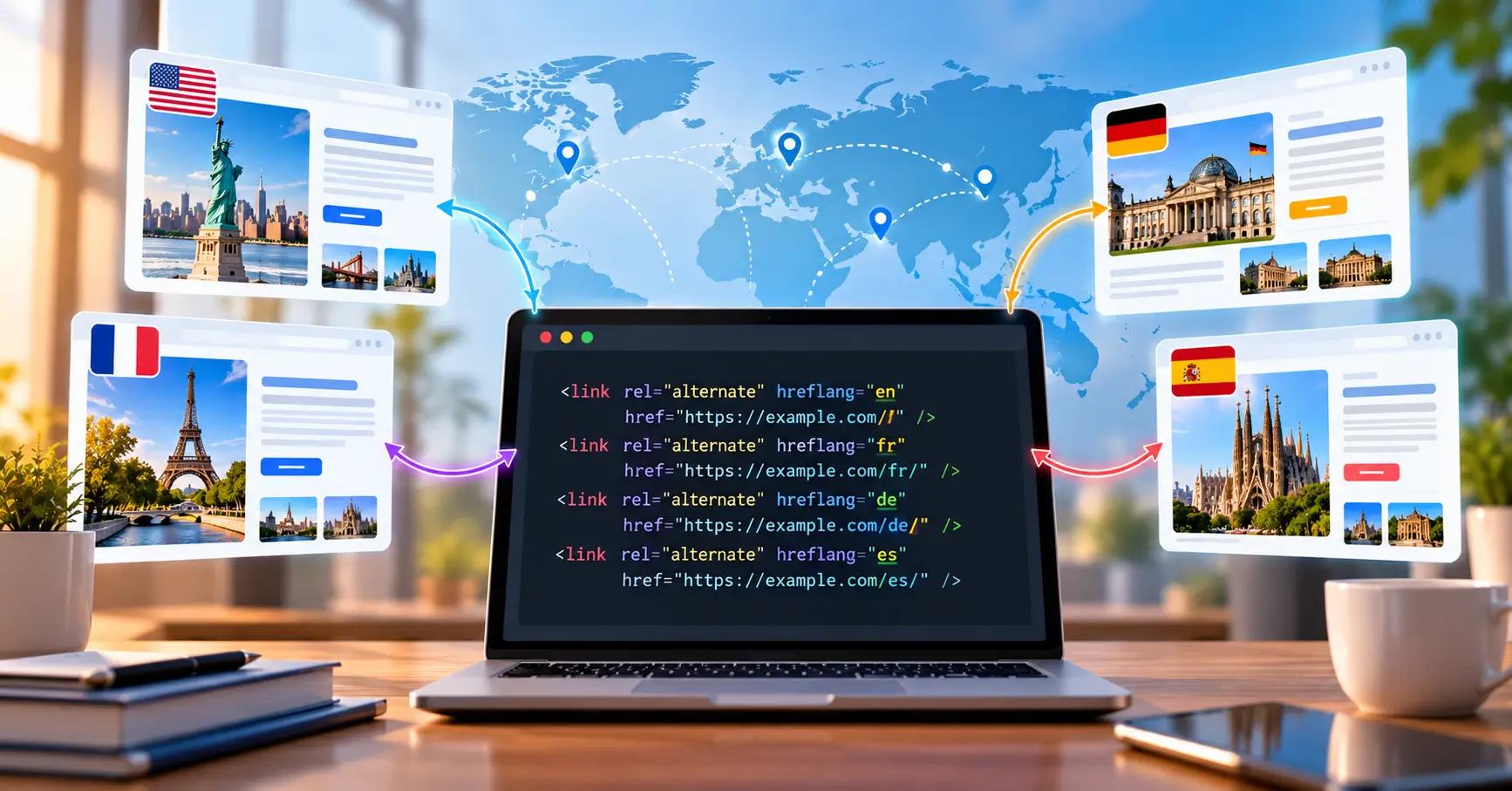
Hreflang helps search engines understand the relationship between different language or regional versions of a page. For example, a business may have English, French, and German versions of the same service page.
Correct hreflang implementation can help communicate which version is intended for a particular language or regional audience.
However, hreflang is only one part of Multilingual SEO Services. It should work alongside properly localised content, suitable URLs, accurate metadata, internal linking, and a technically sound website structure.
A multilingual website therefore needs both content optimisation and technical SEO to create a consistent international search strategy.
Key Benefits of Multilingual SEO Services for Businesses
The main advantage of Multilingual SEO Services is that they help businesses build a search presence that is relevant to different languages and international audiences. Instead of treating every market the same way, businesses can create a more targeted approach based on local search behaviour.
Expand Your Organic Search Reach
A multilingual website can give businesses opportunities to appear for searches that are not made in their primary language. By researching language-specific keywords and creating relevant content, businesses can make their websites more accessible to international audiences.
Generate More Relevant International Leads
International SEO should focus on relevance rather than simply increasing website visitors. When pages target the right keywords and match the expectations of users in each market, the traffic they attract can be more closely aligned with the business’s products or services.
Improve User Experience Across Languages
Visitors should be able to find information easily regardless of the language they use. Localised navigation, headings, content, metadata, and calls to action can create a more consistent user experience across different website versions.
Support International Business Expansion
Businesses entering new countries often need to understand how customers search before investing heavily in content. Multilingual SEO Services can support this process by identifying search demand, relevant keywords, content opportunities, and technical requirements for each target market.
Who Can Benefit From Multilingual SEO Services?
Multilingual SEO Services can benefit businesses that want to reach customers across different languages or expand their online presence into international markets.
E-Commerce Businesses
E-commerce websites often have products that can be sold across multiple countries. Localised product pages, category pages, keyword research, and metadata can help these businesses create a better search experience for different audiences.
SaaS and Technology Companies
SaaS companies can use multilingual SEO to introduce their software, features, documentation, and educational resources to customers in new markets. A localised content strategy can also help address questions and search behaviour specific to different audiences.
B2B Companies
B2B businesses entering international markets can use international SEO services to improve the discoverability of their solutions, industry pages, case studies, and service content.
Travel and Hospitality Businesses
Travel businesses depend heavily on customers researching destinations, accommodation, experiences, and services online. Language-specific content can help these businesses communicate more effectively with international visitors.
Professional Service Businesses
Consulting firms, agencies, technology providers, and other professional service businesses can use multilingual SEO when they want to attract enquiries from customers in different countries or language markets.
Common Multilingual SEO Mistakes Businesses Should Avoid

Creating multiple language versions does not automatically create a successful international SEO strategy. Several common mistakes can reduce the effectiveness of a multilingual website.
Directly Translating Keywords
A direct translation may not represent the phrase people actually use when searching. Multilingual keyword research should consider local terminology, search volume, intent, and variations instead of simply translating an existing keyword list.
Using the Same Strategy for Every Market
Different countries and languages can have different competitors, search behaviour, terminology, and customer expectations. A successful multilingual website should account for these differences.
Ignoring Search Intent
The same product or service can generate different types of searches across markets. Businesses should understand whether users are looking for information, comparisons, pricing, solutions, or a specific provider.
Incorrect Hreflang Implementation
Incorrect or incomplete hreflang configuration can create confusion about the relationship between language and regional pages. Technical SEO teams should review hreflang implementation carefully alongside canonical tags and website architecture.
Creating Poorly Localised Content
Content that sounds unnatural can reduce user trust and make a page less useful. SEO content localisation should focus on natural language, relevant terminology, and the expectations of the intended audience.
Ignoring Technical SEO
Multilingual websites need the same technical SEO fundamentals as other websites, including crawlability, indexability, page performance, internal linking, canonicalisation, and XML sitemaps.
What Should You Look for in Multilingual SEO Services?
Choosing a provider should involve more than looking for someone who can translate website content. Effective Multilingual SEO Services should combine SEO expertise, localisation, content strategy, and technical implementation.
Look for a provider that offers:
- Multilingual keyword research based on local search behaviour
- Content localisation rather than basic translation
- Technical SEO for multilingual websites
- Hreflang implementation and validation
- Language-specific on-page optimisation
- International keyword targeting
- Competitor and market research
- Performance tracking and SEO reporting
- A strategy that can adapt as the business enters additional markets
A provider should also be able to explain why a particular language, market, keyword, or technical approach is appropriate for the business rather than simply applying the same process to every website.
How Much Do Multilingual SEO Services Cost?
The cost of Multilingual SEO Services depends on the scope of the project rather than a single standard rate. A small website targeting two languages will have different requirements from a large e-commerce website targeting several countries.
Pricing can be influenced by:
- Number of languages
- Number of target countries
- Website size
- Number of pages requiring optimisation
- Keyword competition
- Content creation and localisation requirements
- Technical SEO requirements
- Existing website architecture
- Ongoing SEO support
Businesses should therefore evaluate the scope, strategy, deliverables, and expected work involved instead of comparing providers only by price.
How AHA Technocrats Helps Businesses With Multilingual SEO
At AHA Technocrats, multilingual SEO can be approached as a combination of search strategy, content optimisation, localisation, and technical SEO. The focus should be on helping businesses create a website experience that is relevant to the languages and markets they want to reach.
Our approach can include multilingual keyword research, content optimisation, technical SEO, international targeting, and performance analysis based on the business’s goals.
Multilingual Keyword Research and Strategy
We can identify relevant keywords and search variations for different languages and target markets rather than relying solely on direct keyword translation.
Multilingual Content Optimisation
Content can be structured and optimised around the language, search intent, and audience of each target market.
Technical SEO for Multilingual Websites
Technical elements such as website structure, hreflang, canonical tags, internal linking, XML sitemaps, and indexing can be considered as part of the multilingual SEO strategy.
International Search Visibility
The strategy can focus on helping businesses build a stronger organic presence across selected international markets while keeping the website structure clear for users and search engines.
Performance Tracking and SEO Reporting
SEO performance can be reviewed using relevant metrics such as organic visibility, rankings, traffic, engagement, and conversions to understand how different language versions are performing.
How to Build a Successful Multilingual SEO Strategy
A practical multilingual SEO strategy should begin with the markets that matter most to the business rather than attempting to target every language at once.
1. Identify Your Target Markets
Start by identifying the countries and language audiences that represent genuine business opportunities. Consider existing customers, international enquiries, market demand, and business expansion plans.
2. Research Local Search Demand
Analyse how users search for your products or services in each target language. Look beyond direct translations and identify local terminology, related searches, questions, and commercial keywords.
3. Build a Language-Specific Keyword Strategy
Group keywords according to search intent and create a keyword strategy for each language or market. Include informational, commercial, and long-tail keywords where they are relevant.
4. Localise Website Content
Adapt content so it reads naturally for the intended audience. Optimise headings, body content, metadata, calls to action, and other important page elements.
5. Optimise Technical SEO
Review URL structures, hreflang, canonical tags, internal links, sitemaps, crawlability, indexability, and other technical elements across language versions.
6. Track Rankings, Traffic, and Conversions
Monitor how each language version performs. This helps identify which markets are generating visibility and engagement and where further optimisation may be needed.
Are Multilingual SEO Services Right for Your Business?
Multilingual SEO Services may be worth considering if your business already attracts international visitors, plans to enter new countries, or serves customers who speak different languages.
You may particularly benefit from multilingual SEO if:
- Your business is expanding into international markets.
- You already receive traffic from different countries.
- Your website is available in multiple languages but receives limited organic visibility.
- You want to target customers in their preferred language.
- Your existing translated content is not generating the expected search visibility.
- You need a structured international SEO strategy.
The right approach depends on your target markets, business objectives, website structure, competition, and available resources.
Frequently Asked Questions About Multilingual SEO Services
What are Multilingual SEO Services?
Multilingual SEO Services involve optimising a website for users who search in different languages. They can include multilingual keyword research, content localisation, on-page SEO, technical SEO, hreflang implementation, and international performance tracking.
Is multilingual SEO the same as translating a website?
No, multilingual SEO is more than website translation. Translation changes the language, while multilingual SEO also considers search intent, local keywords, metadata, website structure, technical SEO, and how users search in different markets.
Why is keyword research important for multilingual SEO?
Keyword research helps identify how users actually search in each language. Directly translating keywords can miss local terminology, search variations, and commercial search intent.
What is hreflang in multilingual SEO?
Hreflang is a technical signal used to indicate language or regional versions of a webpage. It helps search engines understand the relationship between different versions of similar content.
Can multilingual SEO help a business entering a new country?
Yes, multilingual SEO can support international expansion by helping businesses research local search demand and optimise their website for relevant audiences. The strategy should be based on the specific country, language, competition, and business objectives.
Should every page on a multilingual website be translated?
Not necessarily. Businesses should prioritise pages that provide value to the target audience and align with search demand and business goals. A content audit can help determine which pages should be localised first.
How long does multilingual SEO take to show results?
The timeframe varies by website, market, competition, content quality, and technical condition. Businesses should treat multilingual SEO as an ongoing optimisation process rather than expecting a fixed result within a specific period.
How do I choose the right multilingual SEO company?
Look for a provider that combines multilingual keyword research, content localisation, technical SEO, international SEO knowledge, and transparent reporting. The provider should also be able to explain how its strategy will address your specific target markets.
