


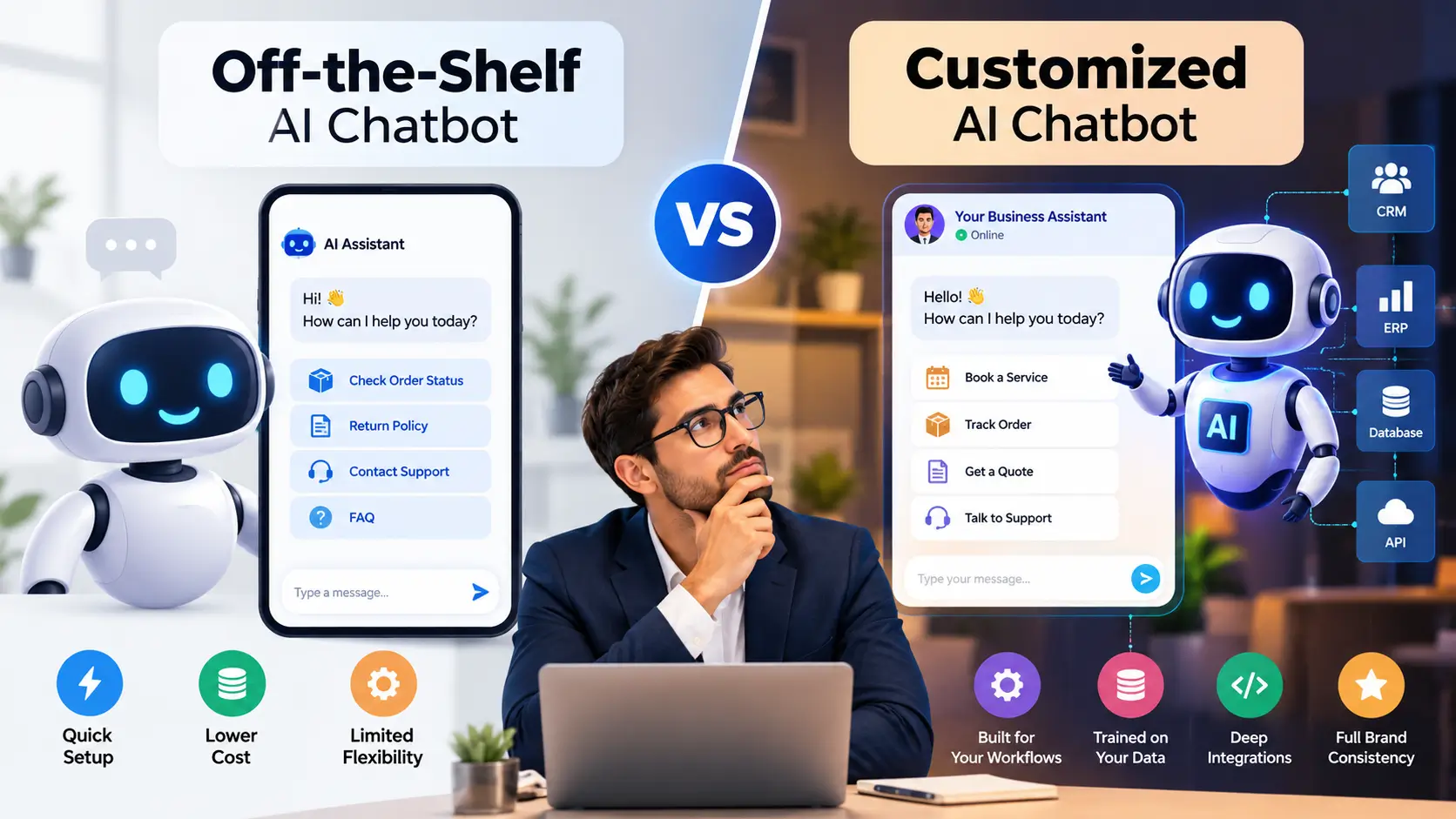
Off-the-shelf vs customized AI chatbots comes down to how closely your business needs match a generic template. Off-the-shelf chatbots work well for simple, common use cases and get you running within days, while customized AI chatbots are built around your specific workflows, data, and brand voice, offering far more flexibility as your business grows. The right choice depends on your current complexity, budget, and how much the chatbot needs to integrate with your existing systems.
Key Takeaways
Why This Choice Matters More Than It Seems
Many businesses start with a quick, off-the-shelf chatbot to test the waters, only to realize months later that it cannot handle their actual customer questions, cannot connect to their CRM, or sounds nothing like their brand. Off-the-shelf vs customized AI chatbots is not just a pricing decision, it shapes how useful the chatbot actually becomes once real customers start using it daily.
This guide breaks down what separates these two approaches, what a truly customized chatbot includes, and how to know which one genuinely fits your business right now.
What Is an Off-the-Shelf AI Chatbot?
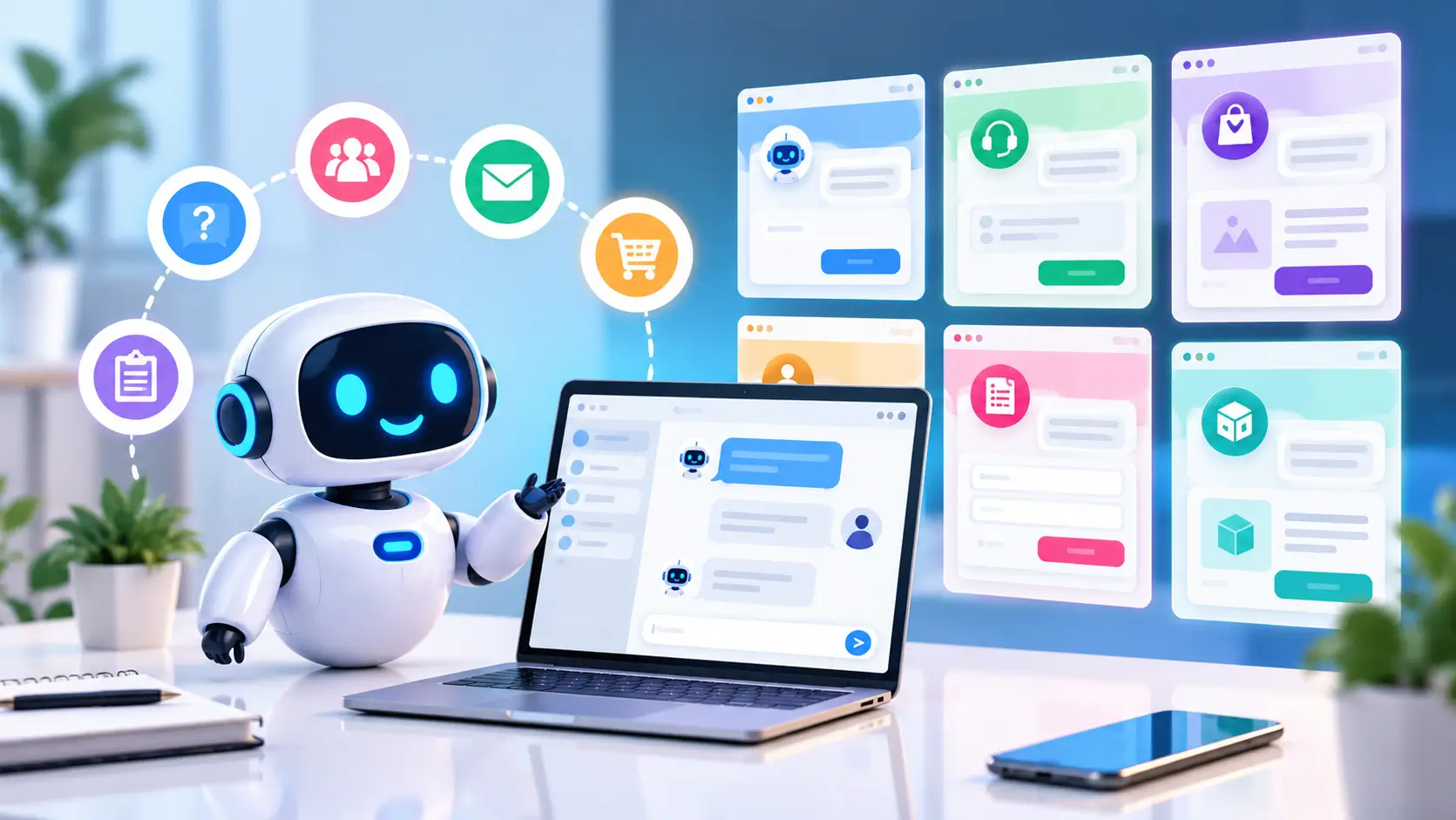
An off-the-shelf AI chatbot is a pre-built solution designed to work across many different businesses with minimal setup. These tools typically offer a library of common templates, FAQs, basic lead capture, simple product questions, that can be deployed quickly with limited technical effort.
This approach works well for straightforward use cases where businesses need a chatbot live fast and do not require deep integration with internal systems or highly specific conversational logic. The trade-off is flexibility, since the chatbot’s core structure is built to serve many businesses at once, not yours specifically.
What Is a Customized AI Chatbot?
A customized AI chatbot is built specifically around your business, trained on your actual data, integrated with your existing tools, and designed to follow your real customer workflows rather than a generic template. Instead of offering broad, surface-level answers, a customized chatbot understands your products, your policies, and the specific questions your customers actually ask.
This approach takes more time and investment upfront, but it results in a chatbot that genuinely reflects how your business operates, rather than forcing your business to adapt to the chatbot’s limitations.
Off-the-Shelf vs Customized AI Chatbots: Key Differences
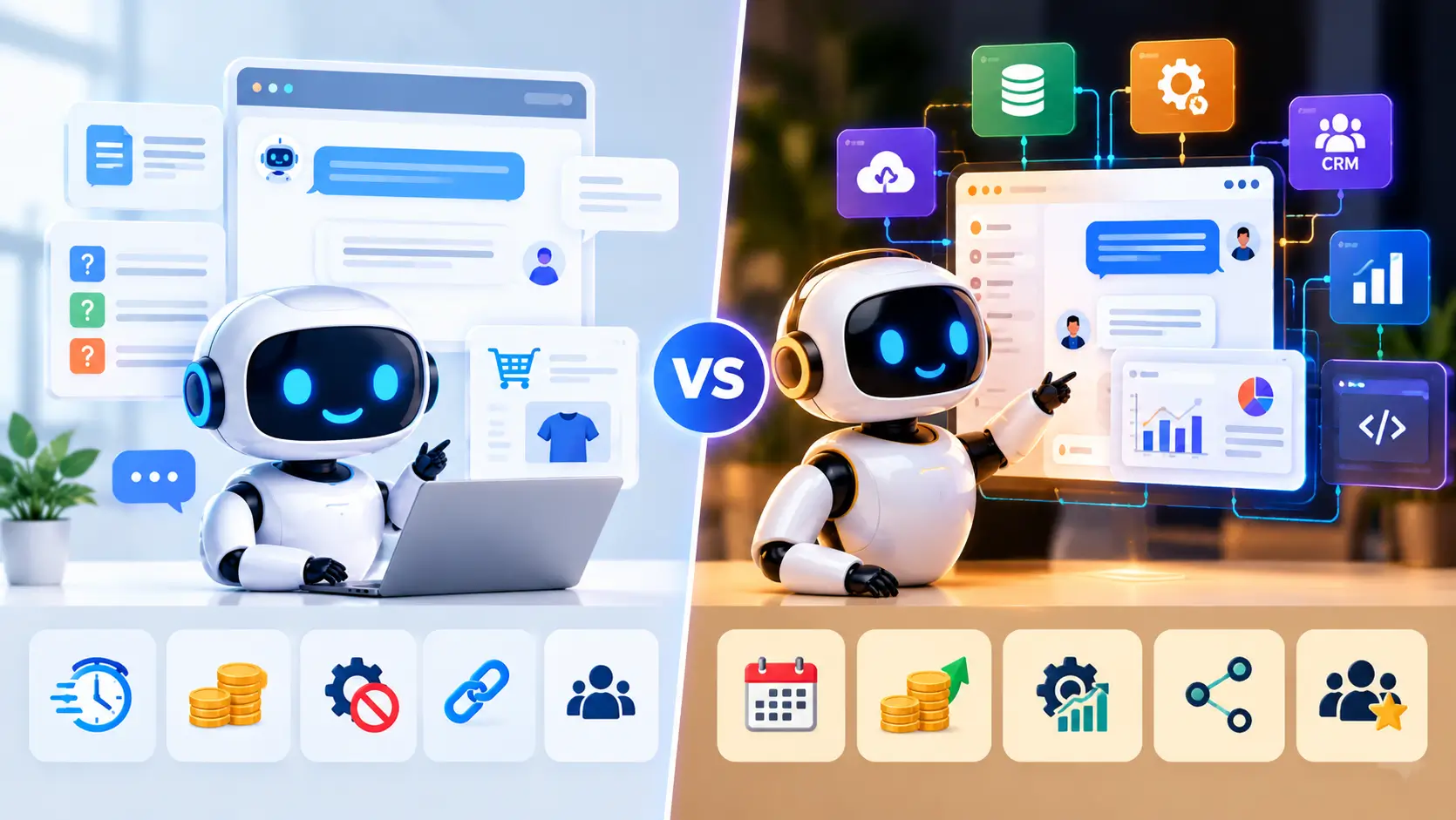
Understanding how these two approaches differ across practical factors makes the right choice much clearer for your specific situation.
Setup Time
Off-the-shelf chatbots can often go live within days, since most of the structure is already built and simply needs basic configuration. Customized chatbots take longer, since development involves training on your specific data and building workflows unique to your business.
Cost
Off-the-shelf chatbots typically cost less upfront, often available through subscription pricing with minimal setup fees. Customized chatbots involve a higher initial investment, since development time goes into tailoring the solution specifically to your business rather than applying a one-size-fits-all template.
Flexibility and Scalability
Off-the-shelf chatbots offer limited flexibility, since changes are often restricted to what the platform’s templates allow. Customized chatbots scale more effectively, since they are built with your specific growth and evolving needs in mind from the start.
Integration With Existing Tools
Off-the-shelf chatbots often support only a limited set of pre-built integrations, which may not include your specific CRM, helpdesk, or internal systems. Customized chatbots can be built to integrate directly with whatever tools your business already relies on, keeping data connected rather than siloed.
Brand Voice and User Experience
Off-the-shelf chatbots tend to sound generic, since their responses are built for broad, universal use across many businesses. Customized chatbots can be trained to match your specific brand voice and tone, creating a more consistent, trustworthy experience for your customers.
Key Elements of a Truly Customized AI Chatbot
A genuinely customized chatbot goes far beyond simply changing colors or adding your logo to a template. A few core elements separate real customization from surface-level branding.
Trained on Your Own Business Data
A truly customized chatbot learns from your actual product catalog, support documentation, past customer conversations, and internal knowledge base, rather than relying on generic responses. This allows it to answer specific, detailed questions accurately instead of giving vague, templated replies.
Custom Workflows and Business Logic
Customization means building conversation flows around how your business actually operates, your specific sales process, support escalation rules, or booking requirements, rather than forcing your workflow to fit a generic template’s limited options.
Multilingual and Industry-Specific Capabilities
Businesses serving diverse customer bases often need chatbots that understand industry-specific terminology and communicate fluently across multiple languages. A customized chatbot can be built with this depth from the start, something most off-the-shelf tools handle only superficially, if at all.
When an Off-the-Shelf Chatbot Is Actually the Right Choice
Customization is not always necessary, and being honest about that matters. An off-the-shelf chatbot can be the smarter choice in a few genuine situations:
- You’re a small business just starting out and want to test whether chatbot automation even fits your customer support needs before a larger investment.
- Your use case is simple and repetitive, answering basic FAQs, capturing leads, or sharing store hours, where deep customization would add cost without adding real value.
- Your customer interactions are straightforward and unlikely to change significantly in the near future.
- You need something live quickly with minimal setup time and budget.
If your business fits these patterns, an off-the-shelf solution can be a smart, budget-conscious starting point.
Signs Your Business Has Outgrown a Generic Chatbot
A few clear signs suggest it may be time to move beyond an off-the-shelf solution:
- Your chatbot gives customers incorrect or overly generic answers because it cannot access your actual product or policy details.
- Your team steps in manually and frequently because the chatbot cannot handle specific, business-related questions.
- You need the chatbot to connect with internal systems, your CRM, inventory, or booking software, that the off-the-shelf platform simply does not support.
- Customers regularly comment that the chatbot “doesn’t sound like your brand”.
- The chatbot fails to understand industry-specific terms or context relevant to your business.
If several of these signs sound familiar, it usually confirms the generic template has reached its limit.
Industries That Benefit Most From Customized AI Chatbots
Certain industries see especially strong value from customized chatbot solutions, given the complexity and specificity of their customer interactions.
- Healthcare – benefits from chatbots trained to handle sensitive, detailed patient questions accurately and securely.
- Ecommerce – gains from chatbots that understand real-time inventory, order status, and personalized product recommendations.
- Financial services and fintech – rely on customized chatbots to handle compliance-sensitive conversations correctly.
- Real estate – benefits from chatbots that can manage complex, multi-step property inquiries and scheduling
- Travel and hospitality – uses customized chatbots to handle multi-step booking processes, itinerary changes, and detailed availability questions that generic templates simply cannot replicate accurately
How AHA Technocrats Builds Customized AI Chatbot Solutions
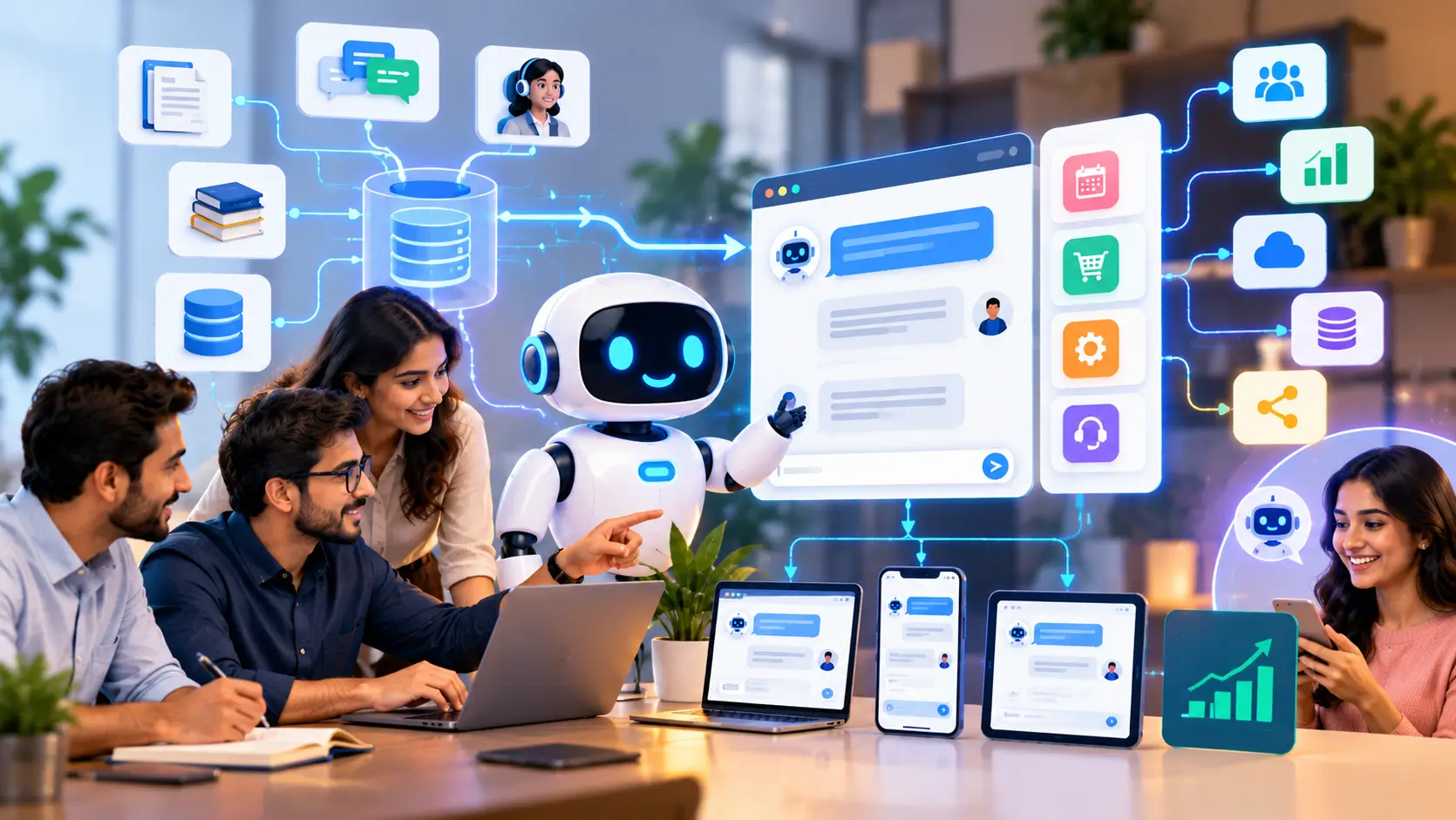
AHA Technocrats builds customized AI chatbots trained specifically on your business data, workflows, and brand voice, rather than adapting a generic template. Our team starts by understanding your actual customer interactions, your support documentation, and your internal processes, then builds a chatbot that genuinely reflects how your business operates.
This approach works alongside our broader AI development services, ensuring your chatbot integrates smoothly with your existing tools and scales as your business grows. Whether you are exploring your first chatbot or upgrading from a generic solution that has reached its limits, our team builds a solution designed specifically around your actual needs.
Frequently Asked Questions
Is a customized chatbot more expensive than an off-the-shelf one?
Yes, generally. Customized chatbots involve more upfront development time, since they are built and trained specifically for your business, while off-the-shelf solutions offer lower initial costs through pre-built templates and subscription pricing.
Can a customized chatbot integrate with my existing CRM?
Yes, customized chatbots can be built to integrate directly with your existing CRM, helpdesk, or other internal tools, something most off-the-shelf solutions offer only through limited, pre-built integration options.
How long does it take to build a customized AI chatbot?
Timeline depends on complexity, but customized chatbots typically take several weeks to a few months, since development involves training on your specific data and building workflows unique to your business processes.
Do customized chatbots support multiple languages?
Yes, customized chatbots can be built with genuine multilingual support tailored to your specific customer base, going beyond the basic translation features many off-the-shelf tools offer.
Conclusion
Off-the-shelf vs customized AI chatbots is not about which option is universally better, it is about which one actually fits your business’s current complexity and goals. Off-the-shelf solutions offer a fast, affordable starting point for simple use cases, while customized chatbots deliver the flexibility and accuracy businesses need once their customer interactions become more complex. AHA Technocrats helps businesses build customized AI chatbot solutions that genuinely reflect how they operate, rather than forcing them to adapt to a generic template’s limitations.
